Explore the Quranic verses and new interpretations that suggest the Wall of Yajuj Majuj or Gog of Magog is not vertical but horizontal, sealing a gateway to the underworld.
Introduction
For centuries, scholars and researchers have pondered the mystery of the Wall of Gog and Magog, as mentioned in various religious texts, including the Quran and the Bible. Traditionally, this wall has been understood as a towering vertical structure, meant to hold back the destructive forces of Gog and Magog until the Day of Judgment. However, a new interpretation suggests that the Wall of Gog and Magog may not be a vertical structure at all. Instead, it could be a horizontal barrier, sealing a deep passageway leading to the underworld. This hypothesis, drawn from a fresh analysis of Quranic verses and historical context, opens up fascinating possibilities about the true nature of this ancient barrier.
Quranic Verses and the Horizontal Barrier Interpretation
The Wall of Gog and Magog is primarily mentioned in Surah Al-Kahf (Chapter 18) of the Quran. The verses describe the journey of a powerful and just ruler named Zulqarnain, who travels to distant lands and encounters a group of people living between two mountains. These people request his help in building a barrier to protect them from the corrupt forces of Gog and Magog.
Quran, Chapter 18: Verses 94-98:
94 – They said, “O Zul-Qarnain, Gog and Magog are corruptors of the earth. Can we pay you to create a barrier between us and them?”
95 – He said, “My Lord has given me great bounties. If you cooperate with me, I will build a dam between you and them.”
96 – Bring to me masses of iron. Once he filled the gap between the two palisades, he said, “Blow.” Once it was red hot, he said, “Help me pour tar on top of it.”
97- Thus, they could not climb it, nor could they bore holes in it.
98 – He said, “This is mercy from my Lord. When the prophecy of my Lord comes to pass, He will cause the dam to crumble. The prophecy of my Lord is truth.”
Traditionally, this has been understood as a wall that stretches vertically between two mountains. However, if we examine the Quranic Arabic, the word used for the barrier is “Radm” (رَدْمًا), which can mean “to block, fill up, or shut.” This word doesn’t specify the direction of the barrier—whether vertical or horizontal. Could it be possible that Zulqarnain created a horizontal sealing rather than a vertical wall?
The Case for a Horizontal Barrier
A deeper interpretation of the word “Radm” leads to the hypothesis that the Wall of Gog and Magog is, in fact, a horizontal barrier. Rather than envisioning a towering structure reaching the sky, we can consider that Zulqarnain may have sealed a massive hole, chasm, or passageway that led to the underworld—an abyss where Gog and Magog were trapped. This barrier could have been laid flat across the ground, effectively preventing Gog and Magog from ascending to the surface world.
Quran, Chapter 18: Verse 97:
Thus, they could not climb it, nor could they bore holes in it.
The inability of Yajuj Majuj or Gog of Magog to “climb” or “bore” through the barrier could further support this horizontal interpretation. If the barrier were laid horizontally, Gog Magog would be unable to ascend from the depths of the earth, nor could they break through from below. Additionally, Zulqarnain’s use of iron and molten tar, poured to fill the gap, aligns with the concept of sealing a deep fissure or hole, much like a modern engineer might seal a dangerous crevice.
Sealing the Underworld: A Gateway to Gog and Magog
In various religious traditions, the underworld is seen as a place where malevolent forces dwell, often sealed away from the human world. The notion of Gog and Magog being trapped beneath the earth resonates with ancient mythologies that speak of great monsters or corrupt beings imprisoned in the depths until the end of time. If we interpret the Wall of Gog and Magog as a horizontal seal, it aligns with the belief that these forces are kept in the underworld until their eventual release as part of the apocalypse.
In support of this idea, the Quran describes Gog and Magog’s eventual release in Surah Al-Anbiyah (Chapter 21):
Quran, Chapter 21: Verse 96:
(This inviolable law will remain in force) even when (the great powers like) Gog and Magog are let loose and come crashing down from every height and from the crest of every wave, and when they occupy every point of vantage (dominating the whole world and when they excel all other nations).
The verse describes Gog and Magog being let loose and coming down from every height, suggesting that they are initially trapped below the surface, only to ascend when the barrier is broken. This could occur due to natural events like earthquakes, volcanic eruptions, or other disasters that would crack the horizontal seal.
The Location of the Barrier: Could It Be Machu Picchu?
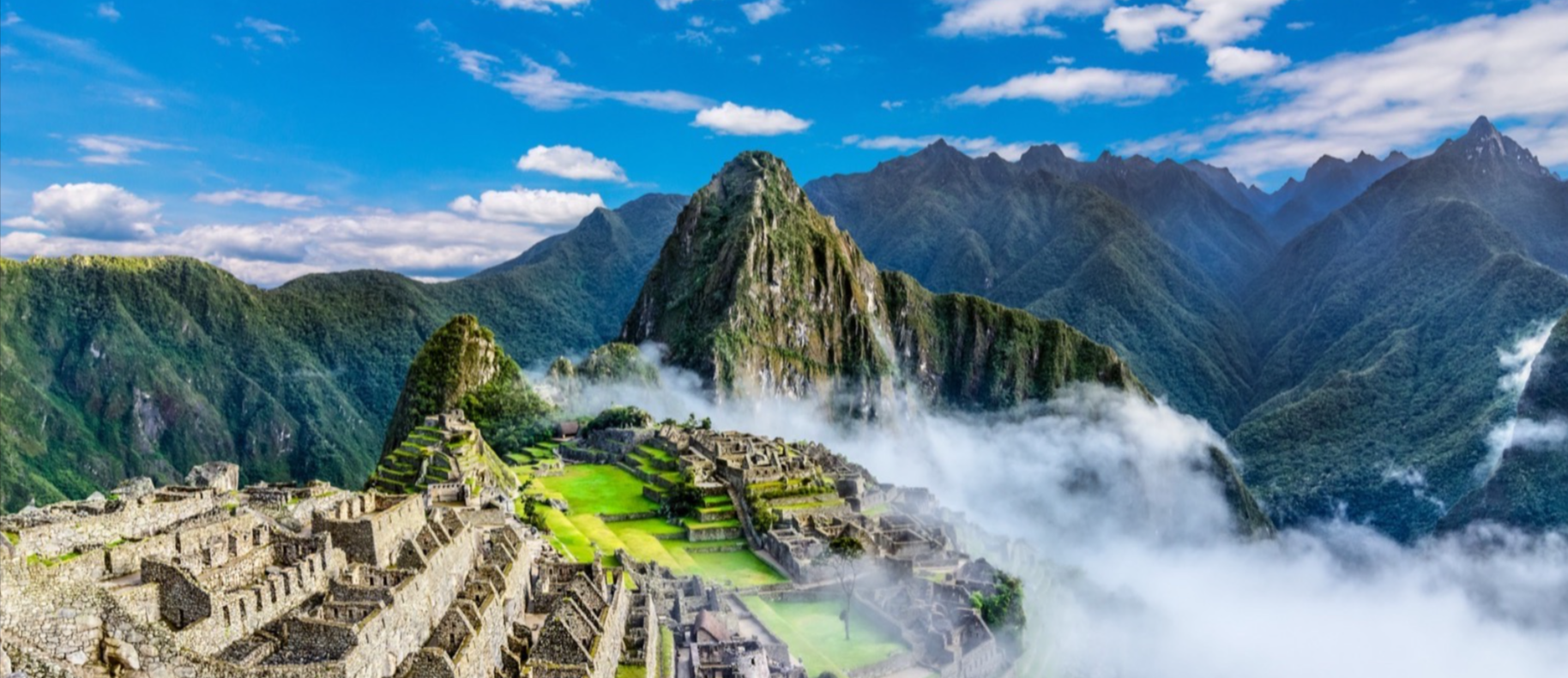
So, where might this horizontal barrier be located? According to the thesis presented here, the mountains of Machu Picchu in Peru could be the site of this ancient seal. The Inca civilization, known for its impressive stonework and mountainous terrain, built significant structures that align with the descriptions of sun instruments and hidden barriers mentioned in the Quranic verses.
Machu Picchu is surrounded by mountains, and there are deep valleys and natural formations that could have been sealed off by a horizontal barrier. The possibility that Zulqarnain traveled to this region and constructed a horizontal barrier to protect the world from the underworld’s forces is worth exploring in light of both historical and religious texts.
Conclusion
The Wall of Gog and Magog has fascinated scholars and believers for centuries. By reinterpreting the Quranic text, we can consider that this wall may not be the towering vertical structure many have imagined. Instead, it could be a horizontal barrier, sealing a deep passageway leading to the underworld, where the destructive forces of Gog and Magog remain trapped until their eventual release in the end times. Whether this barrier is located in the mountains of Peru or elsewhere, the mystery remains compelling and deserves further exploration.
As modern researchers continue to unearth new insights into ancient civilizations and religious texts, the true nature of this ancient barrier may someday be revealed.
Author Bio
Hi, I’m Hira Ansari, a passionate researcher and writer deeply interested in uncovering the mysteries of ancient history, religious texts, and their connections to modern science. With a background in social sciences and technology, I combine both traditional scholarship and cutting-edge research methods to explore thought-provoking topics such as the Wall of Gog and Magog, the origin of the Antichrist, and the scientific explanations of events mentioned in the Quran. My work delves into uncharted territories, presenting fresh interpretations that bridge faith and reason, and I’m committed to sharing these insights with the world. Through my research, I aim to inspire meaningful conversations, challenge conventional views, and offer new perspectives on ancient mysteries.